
Modern construction projects rarely fit standard moulds. Architects sketch unique designs, contractors face site-specific challenges, and interior specialists demand precise measurements that off-the-shelf products cannot deliver. A Yamunanagar plywood factory with customisation capabilities solves this gap, offering tailored solutions that match exact project requirements without forcing compromises on issues like quality or dimensions.
A Yamunanagar plywood factory infrastructure supports both small-scale custom requests and large industrial orders without sacrificing on quality benchmarks. Production lines can switch between standard commercial grades and specialised marine-grade specifications, accommodating diverse project needs under one roof. This flexibility proves particularly valuable when architects require matching aesthetics across multiple phases.
Tailored Dimensional Specifications: Standard plywood sheets typically come in fixed thicknesses like 6mm, 12mm, or 18mm. Custom manufacturing allows intermediate dimensions such as 9mm or 15mm when design calculations demand specific load-bearing capacities. Project managers working on false ceilings or partition walls often need these non-standard measurements to meet architectural specifications.
Core Material Selection: Different projects demand different core constructions. Hardwood cores offer superior screw-holding capacity for heavy-duty applications like kitchen cabinets or commercial fixtures. Softwood cores provide better workability for decorative panelling or acoustic installations. Some factories maintain stocks of both poplar and eucalyptus veneers, allowing clients to specify core types based on project requirements.
Multi-Layer Configuration Options: Industrial clients sometimes require specialised layer arrangements. Seven-ply construction differs significantly from five-ply configurations in terms of strength distribution and bending resistance. Manufacturing facilities equipped with multiple press lines can accommodate these variations, creating panels that match exact engineering specifications rather than forcing designers to compromise.
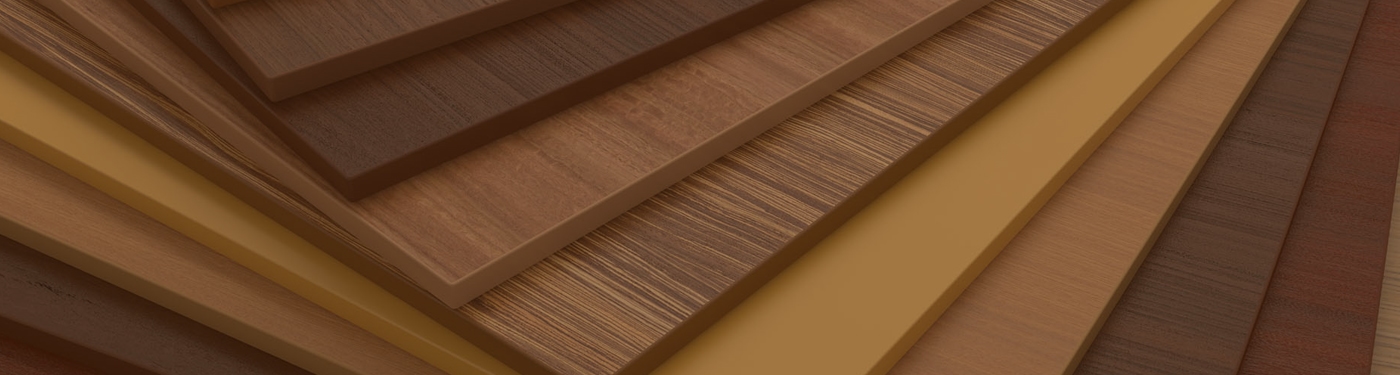
Natural Wood Grain Selection: The visual appeal of finished plywood depends heavily on face veneer quality and species. Factories offering customisation maintain inventories of teak, oak, walnut, and other decorative veneers. Architects specifying high-end interiors can select precise grain patterns and colour tones that align with their design palettes.
Pre-Treatment Applications: Some projects require factory-applied treatments rather than on-site finishing. Fire-retardant chemicals, preservative coatings, or moisture-resistant barriers work better when applied during manufacturing under controlled conditions. Industrial orders for hotels, hospitals, or educational institutions often mandate these pre-treatments to meet safety codes.
Key surface treatment options include:
Edge Banding and Finishing: Cut-to-size orders become truly valuable when edge finishing happens at the factory. Pre-applied edge banding in matching or contrasting colours eliminates site work and reduces labour costs. Furniture manufacturers particularly benefit from this service, receiving ready-to-assemble components that speed up production cycles.
Dimensional Accuracy Benefits: Factory cutting equipment delivers precision that handheld tools cannot match. CNC cutting tables maintain tolerances within millimetres, critical for modular furniture systems or architectural panels that must fit together seamlessly. This accuracy reduces material waste significantly compared to manual cutting.
Volume Order Advantages: Large projects requiring hundreds of identical pieces benefit from factory cutting schedules. Production teams can optimise material usage across entire sheets, minimising offcuts and reducing overall costs. The time saved on-site when pre-cut panels arrive ready for installation often justifies any premium charged.
Special Shape Capabilities: Some architectural applications demand non-rectangular panels. Curved wall sections, circular table tops, or trapezoid-shaped acoustic panels require specialised cutting that most site conditions cannot support. Factories equipped with multi-axis cutting tools handle these requirements, expanding design possibilities for creative projects.
Production Scheduling Flexibility: Manufacturing facilities that accept custom orders typically maintain buffer capacity in their production schedules. This allows them to slot urgent requirements between standard production runs without massive delays. Project managers facing tight deadlines appreciate knowing their custom specifications can be manufactured within predictable timeframes.
Quality Control Protocols: Custom orders receive the same testing standards as regular production. Boiling water tests, density measurements, and adhesive strength verification ensure that tailored specifications never compromise structural integrity. Industrial clients specifying BWP-grade plywood for marine applications need confidence that customisation maintains compliance with relevant quality benchmarks.
Conclusion
Factory-based customisation eliminates the compromise between design vision and material availability. Architects gain freedom to specify exact requirements, contractors reduce on-site labour, and project timelines compress when materials arrive ready for installation. Exploring custom plywood options with experienced manufacturers opens possibilities that standard catalogues cannot address for discerning professionals.
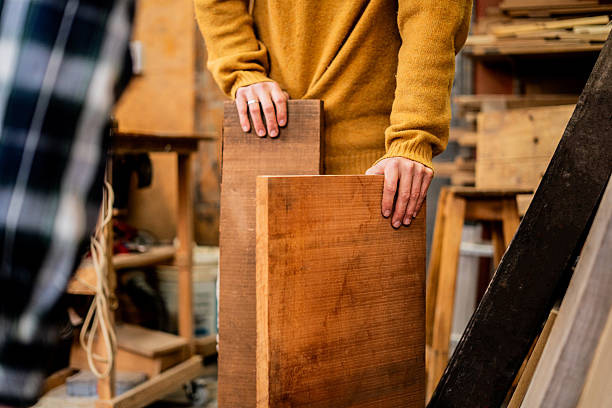
Featured Image Source: https://media.gettyimages.com/id/2233666402/photo/close-up-of-a-carpenter-arranging-woods-in-a-workshop.jpg?s=612×612&w=0&k=20&c=_GinfXUGGb7f2H3wPD0h0UGvuRaw9WqaIZas7LDJwiU=