
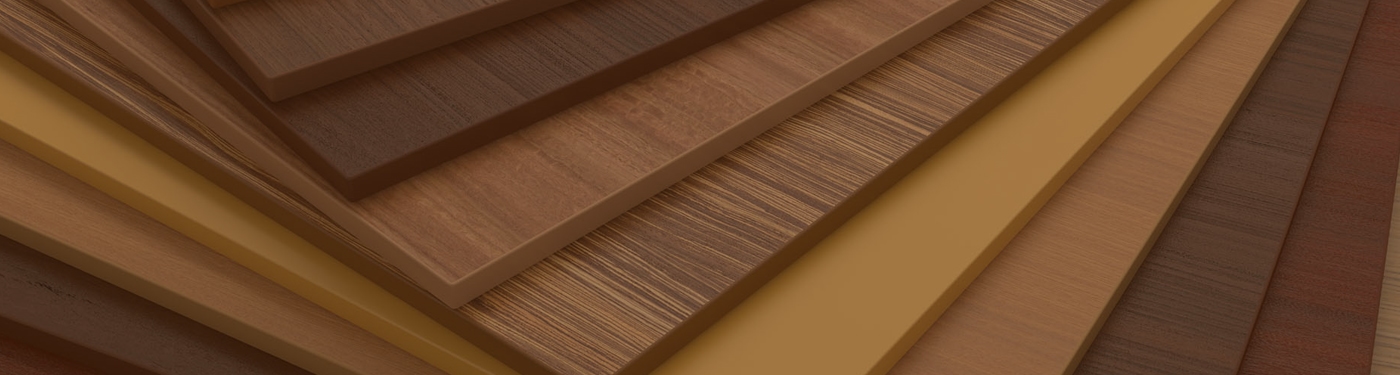
Cheap boards might seem like a bargain initially, but they often lead to causing expensive repairs down the line. When furniture sags, cabinets warp, or shelving units crack under weight, the real cost becomes painfully clear. Commercial plywood offers a different approach entirely, built with layered construction that distributes stress evenly across its surface rather than concentrating it in weak spots.
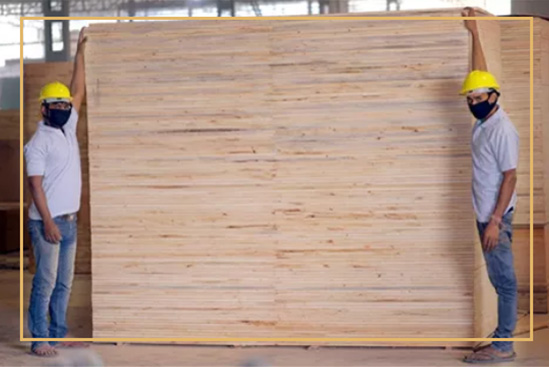
The difference starts with how commercial plywood gets manufactured. Unlike ordinary boards that use a single piece of wood prone to natural grain weaknesses, this engineered material bonds multiple thin layers at right angles. Each layer reinforces the others, creating a panel that resists bending and splitting even under sustained pressure. This cross-grain construction means commercial plywood won’t develop the splits or warping issues that plague solid boards over time.
Layered Bonding Process: The manufacturing process stacks veneer sheets with alternating grain directions, then bonds them using industrial adhesives under high pressure and heat. This creates a unified panel where the strength of one layer compensates for potential weakness in another. The result? A board that maintains dimensional stability even when moisture levels fluctuate or heavy loads get applied.
Density and Weight Distribution: Ordinary boards often have inconsistent density throughout their structure, with knots, gaps, or soft spots creating failure points. Commercial plywood maintains uniform density across its entire surface because the manufacturing process controls material placement precisely. This consistency means you can trust every square inch to perform equally well, whether you’re mounting shelves or building cabinetry.
Load-Bearing Capacity: Think about a bookshelf sagging under the weight of a personal library, or kitchen cabinets pulling away from walls because the material couldn’t handle daily use. Commercial plywood prevents these scenarios through superior tensile strength that ordinary boards simply can’t match. The multi-layer construction distributes weight across the panel rather than stressing individual grain lines.
Moisture Resistance Properties: Bathrooms, kitchens, and coastal homes pose particular challenges for wood-based materials. Ordinary boards absorb moisture unevenly, leading to swelling, warping, and eventual decay. Quality commercial plywood incorporates moisture-resistant adhesives that maintain bond integrity even in humid conditions, keeping panels flat and functional for years.
Installation and Workability: Perhaps the most frustrating aspect of ordinary boards shows up during installation. They split when screws get driven near edges, crack when cut at certain angles, and refuse to hold fasteners securely over time. Commercial plywood machines cleanly, accepts hardware without splitting, and maintains screw-holding power because its layered structure grips fasteners from multiple directions rather than relying on a single grain pattern.
Long-Term Dimensional Stability: Furniture makers and contractors know the sinking feeling when callbacks start coming in about warped panels or twisted frames. These issues stem from material that expands and contracts excessively with temperature and humidity changes. Commercial plywood resists this movement through its cross-laminated design, staying flat and true even when conditions shift.
Initial Cost vs Lifecycle Value: The price tag on ordinary boards looks attractive until you factor in replacements, repairs, and disappointed clients. Smart builders recognise that paying slightly more upfront eliminates expensive callbacks and maintains professional reputation. When commercial plywood prevents structural failures and maintains appearance for decades, the mathematics favour quality every time.
Application-Specific Requirements: Different projects demand different material properties. The key considerations include:
Conclusion
Structural reliability isn’t negotiable when building furniture or fitting interiors that need to last. Commercial plywood delivers consistent performance through engineered construction that ordinary boards can’t replicate, no matter how carefully they’re selected. The choice between materials ultimately determines whether your projects stand the test of time or become costly failures. Consider what your reputation is worth, then choose materials that protect it.