
Choosing plywood feels straightforward until you’re staring at warped cabinets six months later. The market is flooded with different options, yet most buyers can’t distinguish between genuinely reliable suppliers and those cutting corners. What separates the best plywood manufacturers in India from average producers? It comes down to measurable quality markers that protect your investment from premature failure and costly replacements.
Your furniture’s lifespan depends entirely on who made the plywood inside it. The best plywood manufacturers in India maintain transparent sourcing protocols, publish test reports regularly, and never compromise on adhesive chemistry that determines water resistance. These aren’t marketing claims but verifiable practices that prevent the nightmares of delamination, termite damage, and structural collapse that haunt poorly chosen materials.
Core Veneer Selection Protocols: Top manufacturers source timber from certified plantations rather than mystery suppliers with questionable logging practices. This matters because wood quality directly impacts how your plywood responds to humidity, temperature shifts, and mechanical stress over decades of use. Suppliers who document their timber origins typically maintain consistent density and moisture content across production batches.
Species-Specific Processing Requirements: Different hardwoods require tailored drying schedules and veneer peeling techniques. Manufacturers who understand eucalyptus behave differently than gurjan produced sheets with uniform thickness and predictable performance characteristics. This technical knowledge prevents weak spots that become failure points when furniture bears weight or faces environmental challenges in Indian climates.
Testing Frequency That Actually Matters: Claiming IS:303 or IS:710 certification means little if testing happens quarterly instead of with every production run. Reliable manufacturers conduct boiling water tests on random samples daily, checking bond strength after specimens endure six-hour immersion cycles. These protocols catch adhesive batch inconsistencies before defective sheets reach construction sites or furniture workshops.
Third-Party Verification Systems: Some producers invite external laboratories to audit their quality processes unannounced. This transparency signals confidence in manufacturing controls and provides buyers with independent confirmation of grade claims. Ask potential suppliers about their audit history and whether test reports are available for specific batch numbers.
Phenolic Resin Formulations: The gap between adequate and exceptional plywood often traces back to resin quality and application methods. Premium manufacturers use phenol-formaldehyde adhesives with specific viscosity ranges that penetrate veneer surfaces completely. Cheaper alternatives create surface bonds that look acceptable initially but separate under prolonged moisture exposure or thermal cycling.
Press Temperature Monitoring: Proper curing requires precise heat application throughout the pressing cycle. Manufacturers with computer-controlled hot presses maintain uniform temperature distribution, ensuring adhesive cross-linking happens consistently across the entire sheet. Manual or poorly calibrated systems produce panels with variable bond strength that fail unpredictably during fabrication or after installation.
Automated Thickness Calibration: Advanced facilities use laser-guided sanders that maintain thickness tolerances within 0.2mm across panels. This precision prevents the fitting issues and structural inconsistencies that plague furniture made from dimensionally unstable plywood. Manual sanding operations simply cannot achieve the uniformity that modern modular construction demands.
Quality Checkpoints Throughout Manufacturing: Consider these verification stages that define production excellence:
Environmental Controls in Storage: Finished plywood sits in climate-controlled warehouses maintaining 45-55% relative humidity. This prevents pre-delivery dimensional changes that cause installation problems. Suppliers storing products in open sheds or unregulated spaces compromise panel stability before you even receive your order.
Conclusion
Finding quality plywood requires looking past marketing claims to examine actual manufacturing practices. The gap between premium and mediocre producers shows up in sourcing documentation, testing frequency, adhesive specifications, and production precision. Don’t let initial cost savings trap you into buying materials that fail prematurely, costing far more in repairs and replacement. Verify standards compliance, request batch-specific test reports, and choose manufacturers who treat quality as process discipline rather than promotional language. Your projects deserve materials engineered for longevity, not just immediate profitability.
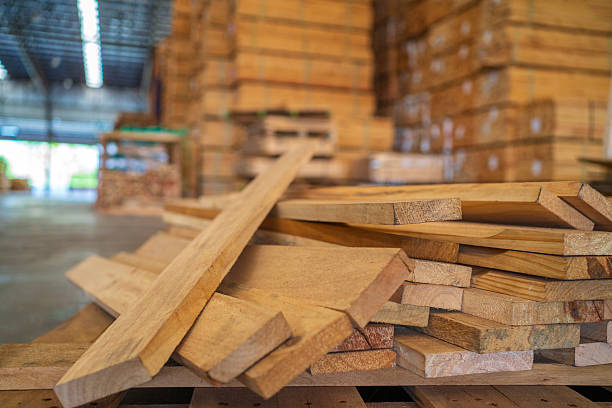
Featured Image Source: https://media.gettyimages.com/id/2246201489/photo/stacked-lumber-folded-wood-closeup-wooden-boards-the-surface-of-the-end-of-the-board-lots-of.jpg?s=612×612&w=0&k=20&c=eqKpcva8e5Dm5c6ot0LV6OIQfXZItmYMn7AmBclUuZQ=